Kleines Entwerfen (Master)
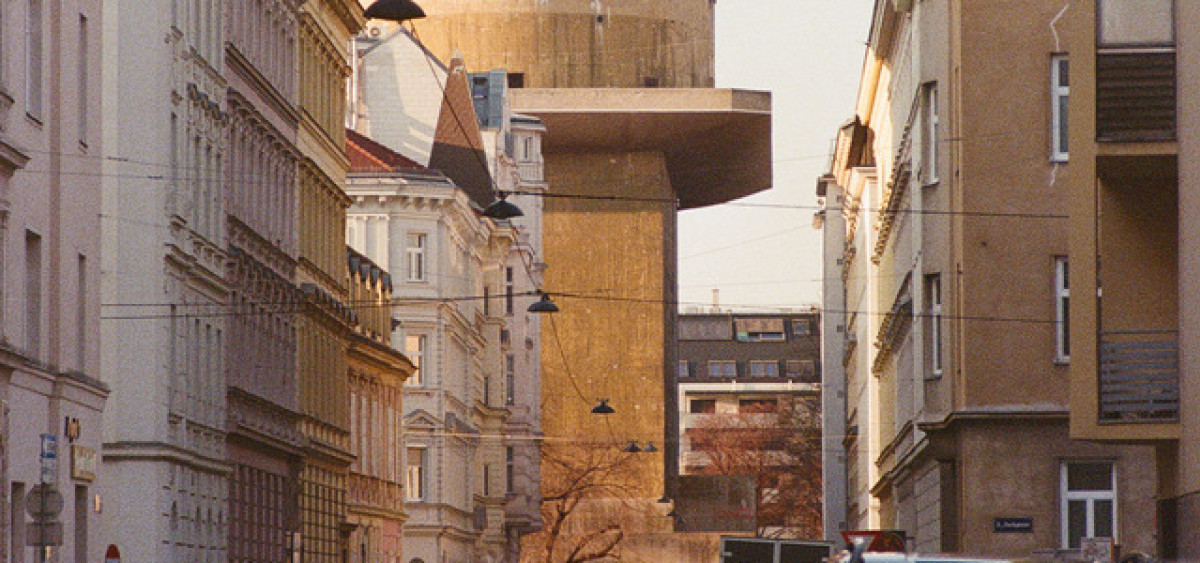



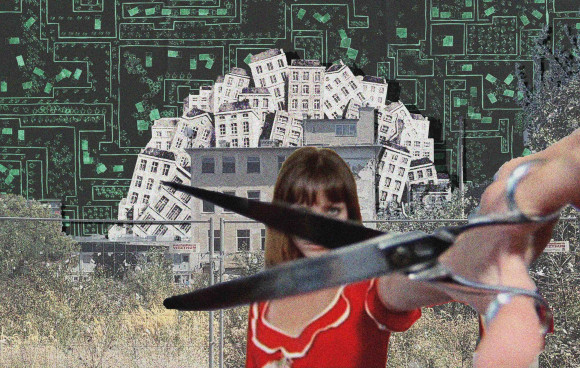
Vienna has a peculiar quality: it is a large city that is exceptionally good at not looking like one.
Few European capitals possess an image of themselves so persistent and so complete. The Ringstraße, the Gründerzeit block, the Gemeindebau, the Prater, the Wienerwald and the Danube belong to radically different moments and forms of urbanity, yet they seem to coexist effortlessly within a single idea of Vienna. The city expands, absorbs villages, industries, infrastructures and populations, but somehow continues to appear as itself. Its metropolitan dimension is repeatedly reconciled with the image of a city whose character, limits and spatial order remain recognisable.
But what happens when a city’s ability to recognise itself becomes an obstacle to seeing what it has become?
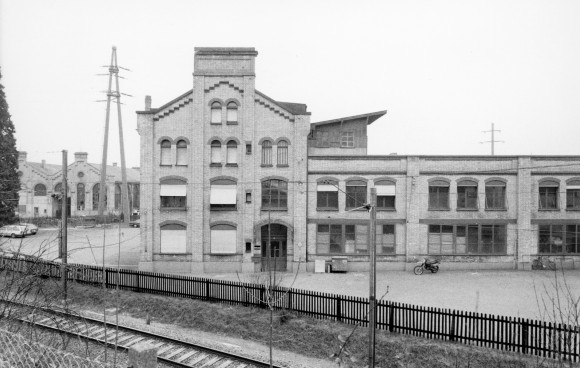
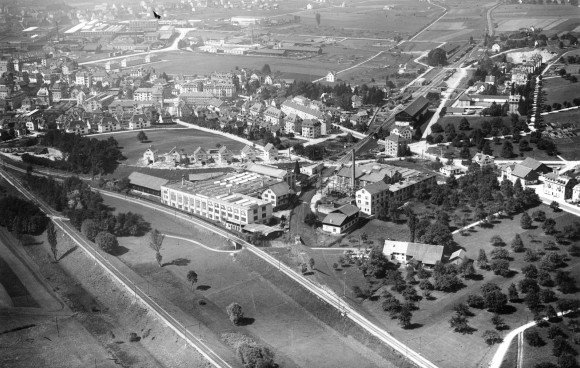
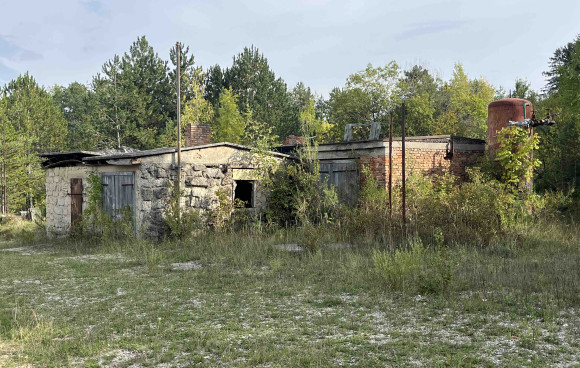
Vienna today extends far beyond the figures through which it traditionally represents itself. Railway territories, industrial compounds, depots, motorway infrastructures, allotment gardens, logistics grounds, housing estates, residual forests, sports fields and immense technical voids constitute another Vienna: discontinuous, heterogeneous and difficult to grasp as a whole. They are often perceived as interruptions of the city, as margins, leftovers or reserves awaiting a more properly urban future. Yet perhaps it is precisely here that Vienna most clearly reveals itself as a Großstadt.
To think Vienna as a large city does not simply mean acknowledging its size. The Großstadt begins where the city can no longer be reduced to one image, one centre, one morphology or one idea of urbanity; where radically different spatial conditions coexist without necessarily being reconciled. Density and emptiness, habitation and production, infrastructure and leisure, architecture and landscape may belong to the same metropolitan reality. What appears fragmented from the point of view of the traditional city can, from another distance, reveal a different form of coherence.
Metropolitan Arcadia begins with this possibility.
Before approaching Vienna, however, the studio will begin elsewhere.
We will redraw a series of Austrian Baroque abbeys. Situated between architecture and territory, these ensembles offer an extraordinary example of architecture understood not simply as a building but as the construction of a world. Cells, cloisters, churches, libraries, refectories, workshops, gardens, orchards, productive grounds and cultivated landscapes are held together within a spatial order able to accommodate both individual existence and collective life. The monastery does not merely occupy the landscape. Through walls, courtyards, paths, thresholds, terraces and gardens, it establishes the relations through which landscape itself becomes inhabitable.
Its Arcadia is therefore anything but natural.
It is constructed.
The pastoral condition of the abbey does not arise from the absence of architecture but from its capacity to establish an agreement between rooms and horizons, enclosure and openness, contemplation and labour, individual withdrawal and collective existence. Architecture gives measure to a territory larger than the building itself.
We will study these ensembles neither as monuments to be imitated nor as models for a contemporary monastery. Our attitude is deliberately laic. Through redrawing, we will attempt to detach their architectonic intelligence from the historical institution that originally produced it. What can the cloister teach us once it is no longer a cloister? What remains of the cell once it is no longer inhabited by a monk? Can a garden organise a community without representing paradise? Can an enclosure produce common ground without producing isolation? How can individual rooms participate in a larger spatial order without losing their autonomy?
The exercise is therefore not one of formal quotation. We do not transfer forms. We transfer questions.
The abbeys will be treated as architectonic memories: spatial constructions whose original world has become historically distant, but whose capacities remain available to thought. Their redrawing is the first act of anamnesis. To remember architectonically does not mean to restore a lost condition. It means to recognise within an inherited form something that can become operative again under entirely different circumstances.
From the abbey, the studio will return to the contemporary city.
This displacement is fundamental. Vienna’s former industrial and infrastructural territories appear almost as the inverse of the monastic world. Instead of a clearly bounded whole, we encounter discontinuity. Instead of an established collective order, heterogeneous and often conflicting forms of life. Instead of cultivated grounds organised around a common institution, fragments of infrastructure, industrial buildings, spontaneous vegetation, logistics, housing and metropolitan voids coexist without an evident centre.
And yet the architectural question remains strangely similar.
How can different forms of life be brought into relation without being reduced to sameness? How can a room belong to a larger world? How can collective space acquire a form? How can architecture organise open ground without simply filling it? How can an architectural intervention establish relations with a territory that extends beyond its own boundaries?
Here, Metropolitan Arcadia becomes not a description of Vienna but a project.
Arcadia has conventionally designated an elsewhere: a condition removed from the conflicts, labour and artificiality of the city. The metropolitan territories of contemporary Vienna make such a distinction increasingly difficult to sustain. Landscape and metropolis penetrate one another. Forests contain infrastructures; fields are crossed by transportation networks; housing faces railway grounds; industrial structures stand among vegetation; recreational landscapes occupy former productive territories. Nature is neither simply outside the city nor its opposite. It participates in the same metropolitan construction.
The studio will work within these territories through collective housing.
Housing will not be approached as the simple multiplication of dwelling units over available ground. It will instead become an instrument through which relationships can be constructed: between individual and collective life, existing structures and new inhabitation, architecture and open territory, domestic space and metropolitan scale. Rather than beginning with the question of how much can be built, we will ask what kind of world architecture might establish there.
The historical Arcadia of the abbey and the metropolitan condition of Vienna will therefore never coincide. Nor should they. The project lies precisely in the distance between them.
The monastery gives us a memory of architecture capable of holding together heterogeneous spaces and forms of life within a common spatial figure. Vienna confronts us with a contemporary condition in which such coherence can no longer be assumed. Between the two lies the possibility of the project: not the reconstruction of a lost order, but the invention of new relations.
Can a fragment become a city without becoming complete? Can collective housing produce more than the accumulation of private interiors? Can landscape become an architectonic figure rather than the residual space between buildings? Can infrastructure, vegetation, existing structures and new rooms participate in a common order without losing their differences? Can architecture make visible a metropolitan condition that Vienna has become exceptionally good at concealing?
We redraw the abbey in order to act in the city.
From monastic Arcadia to Metropolitan Arcadia, Project(s) of Anamnesis asks whether the spatial intelligence of the past can be recollected without nostalgia and displaced into a city that no longer resembles the world from which it came.
Vienna, toujours eine Großstadt?