Integratives Entwerfen (Bachelor)
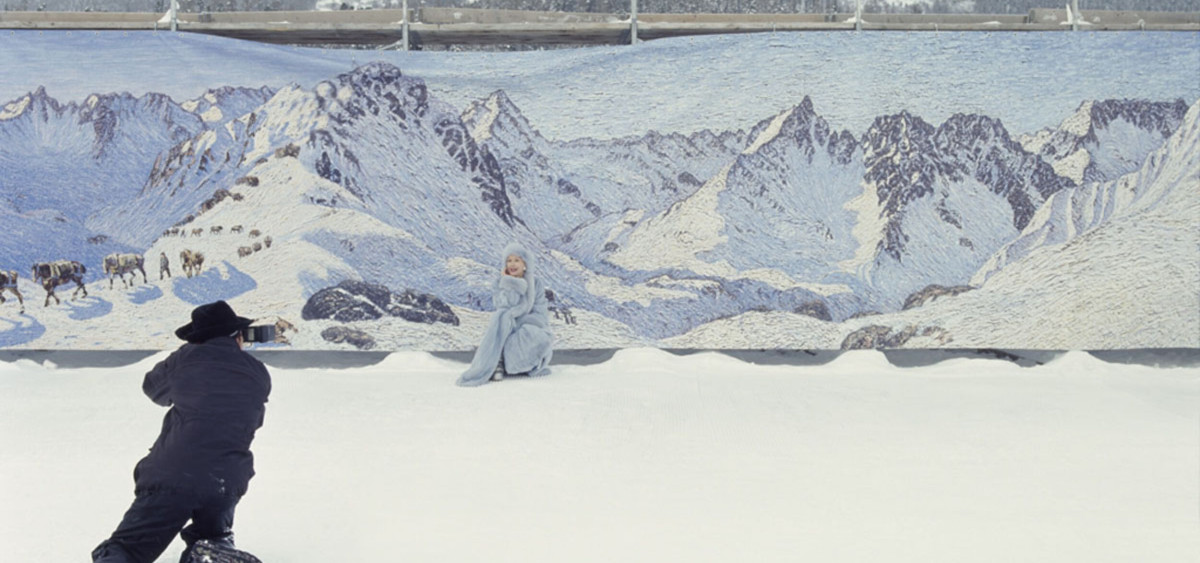



“For the land contains much more than the map wants to show, while the map remains, despite everything, an abstraction. It lacks that which is most characteristic of the land: its breadth, its thickness and its perpetual change.” (André Corboz, The Land as Palimpsest, 1983)
For André Corboz, territory is never a neutral ground. It cannot be understood as something that simply exists. It is an artifact produced through time: shaped by natural forces and human actions, by intentions and conflicts, by projects that accumulate, overlap, and often contradict one another. The land is continuously transformed, written, erased, and rewritten. Corboz uses the metaphor of the palimpsest to describe this condition; like a manuscript scraped and reused, the territory retains traces of what has been there before. These traces are never complete. Some remain visible, others appear as fragments, interruptions, or erasures. What we witness in the present is always partial: a surface marked by layers of different thickness, where multiple moments in time coexist without forming a single, stable image.
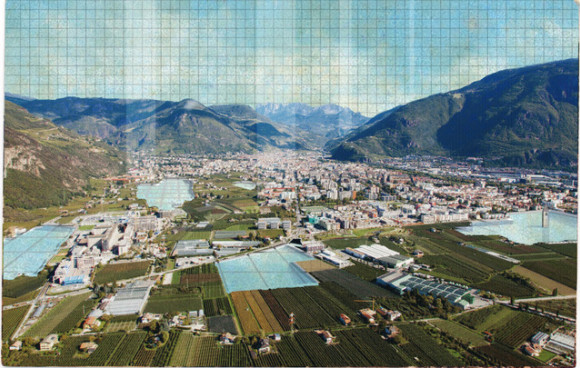
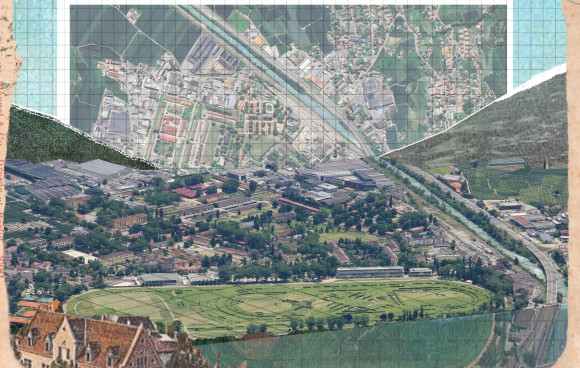
Bolzano and its surroundings can be read through this lens. Located at the intersection of Alpine routes, political borders, and cultural systems, South Tyrol has been repeatedly inscribed by projects of control and transformation. Roads, rivers, railways, and infrastructures occupy the narrow valley floor, while settlements press against the slopes, producing a variety of architectural typologies. Movement and occupation have shaped the land as much as permanence.
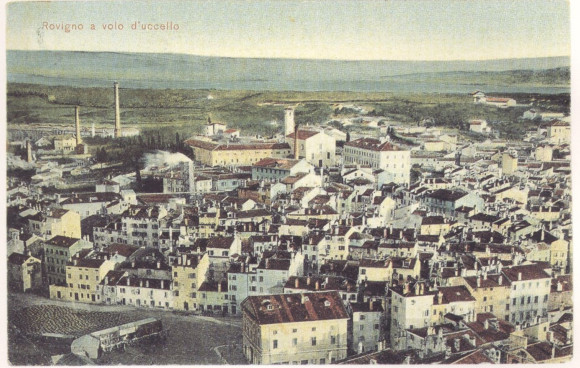
During the twentieth century, political decisions left deep spatial marks: forced Italianization, industrial expansion, workers’ housing, military and NATO infrastructures, and later their abandonment. These interventions layered themselves onto existing conditions, generating parallel spatial orders that still coexist. Housing types, street names, industrial zones, military remnants, and touristic landscapes carry the imprint of these inscriptions.
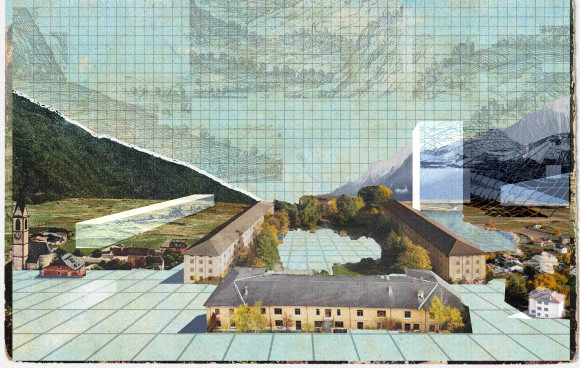
The picturesque landscape of Bolzano conceals this complexity. Seen through Corboz’s palimpsest, it appears not as a finished form, but as a territory thick with traces and unresolved histories. To work here means to engage a land already written many times, where each new intervention enters into dialogue with what remains.
In this studio, housing becomes the central design focus. Alongside architectural tools, a cinematic approach is introduced to observe this layered condition. Through movement, duration, and point of view, cinema frames the territory as a sequence rather than a static object, revealing relationships and overlaps that escape the drawing. Design thus becomes a careful act of rewriting.